 +371 25 856 856
 WhatsApp
 shop@gastroserviss.lv
 Contacts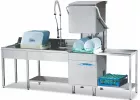
Washing equipment is not only a dishwasher, but the full sanitary processing area of a professional facility. This category covers solutions for washing dishes, kitchen inventory, GN containers, trays, utensils and working tools, as well as commercial laundry equipment, pre-rinse showers, taps, shelves and accessories for organising the clean and dirty flow.
In restaurants, cafés, bars, hotels, canteens, catering and production kitchens, the washing area affects kitchen speed no less than the thermal or refrigeration section. If dirty dishes are delayed, inventory does not return on time, glasses come out with stains, or the clean zone crosses the dirty zone, the work of the kitchen, bar, service area and housekeeping becomes unstable.
In hotels and accommodation facilities, the washing direction is often connected not only with dishes, but also with textiles: towels, uniforms, linen, napkins and other items that require regular washing, drying and processing. Therefore, the main category “Washing” must be viewed more broadly than a standard dishwasher section.
Main washing area sections
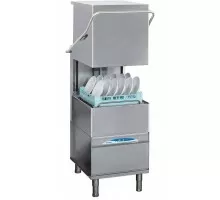
- Dishwashing equipment — undercounter, hood-type, glasswashing and other professional machines for dishes, glasses, cutlery and kitchen inventory;
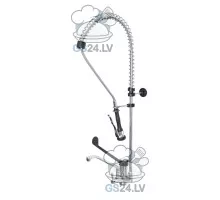
- Showers and taps — pre-rinse showers, mixers, taps and fittings for manual washing, rinsing and preparation before machine washing;
- Dishwasher shelves and accessories — baskets, shelves, trolleys and accessories for organising the washing flow;
- Commercial laundry equipment — professional washing, drying and ironing solutions for textiles, uniforms, towels and linen.
The washing area as a separate working section
The washing area must be organised as an independent technological section. It is necessary to plan the arrival of dirty dishes, removal of food waste, pre-rinsing, basket loading, machine washing, clean dish exit, drying, storage and return of inventory to work. If these stages cross each other, staff make unnecessary movements, dishes are delayed and the clean zone may be contaminated again.
- dirty flow must be separated from clean flow;
- before the machine, a pre-rinse area or initial cleaning place is needed;
- a pre-rinse shower reduces machine load and speeds up staff work;
- baskets, shelves and trolleys need a separate place and should not block passages;
- clean dishes need space for water drainage, drying and further storage;
- for high workload, the direction of dish and staff movement must be planned in advance;
- for hotels and laundries, textile flow, drying, sorting and storage are considered separately.
Detergent dosage, rinse aid and water
Correct detergent dosage is one of the key factors for stable results. If there is too little detergent, grease, deposits, odours and food residues remain on dishes, glasses, cutlery and inventory. If there is too much detergent, chemical consumption increases, stains, chemical smell, foam and unnecessary rinsing load appear.
Rinse aid affects the visual result and drying speed. It helps water drain faster from the surface, reduces stains on glass and cutlery, and improves results in bars, restaurants and hotels. Incorrect rinse aid dosage may leave drops, stains or film on glasses, plates and cutlery.
What to check in chemicals and water
- water hardness and scale risk;
- availability of a water softener or other water treatment;
- detergent dispenser adjustment;
- rinse aid dosage and drying quality;
- washing and rinsing temperature;
- chemical compatibility with machine, dishes and soil type;
- condition of hoses, canisters, filters and dosing pumps;
- regular cleaning of the machine from scale, grease and food residues.
Practical notes from kitchen, bar and washing area staff
- even a good machine will not give stable results if dishes are loaded chaotically and baskets are selected incorrectly;
- for bars, glass washing, water quality, rinsing and absence of stains must be planned separately;
- pre-rinsing is effective only when there is a convenient shower, a suitable sink depth and enough space for dirty dishes;
- if the clean dish exit is too small, staff start placing clean dishes wherever possible and the clean flow mixes with the dirty flow;
- manual chemical dosing often causes overconsumption or unstable results, so dispensers must be checked regularly;
- during intensive work, filters, spray arms and drain should be checked during the shift, not only at the end of the day;
- the floor in the washing area must remain dry and safe, because water, chemicals and rush increase the risk of falls;
- for laundries, dirty and clean textiles, drying, sorting and storage must be separated in advance.
Tips for choosing washing equipment
- start selection from the flow: what exactly needs to be washed, in what volume and when the peak load appears;
- separate dishes, glasses, cutlery, GN containers, kitchen inventory, trays, transport containers and textiles;
- select equipment not only by productivity, but also by space organisation around it;
- check water quality and need for a softener before purchasing a dishwashing machine;
- consider chemical consumption, dispenser settings and availability of detergents;
- for bars, evaluate a glasswasher, glass baskets and drying quality separately;
- for hotels, consider not only dishes, but also laundry: washing, drying, ironing and textile turnover;
- do not mix dishwashing, dirty inventory and textile areas without clear space organisation.
A dishwasher is only part of the washing area
In the narrower “Dishwashing equipment” category, undercounter, hood-type, glasswashing and tunnel machines can be analysed separately. But at the main category level, it is important to understand that the machine is only one element. Around it, there must be tables, sinks, a shower, baskets, shelves, chemical storage, access to water and drain, a safe passage and a clear clean dish exit.
If the machine stands without a proper entry and exit area, staff waste time carrying baskets by hand. If there is no drying space, clean dishes are delayed and block the work area. If chemicals are placed inconveniently or the dispenser is not checked, washing results become unstable. Space organisation affects the result no less than the productivity of the machine itself.
Commercial laundry as part of the washing direction
Commercial laundry equipment is needed for hotels, restaurants, production facilities, medical and service objects where textiles, uniforms, towels, napkins and linen are processed regularly. When selecting it, loading volume, number of cycles per day, fabric type, drying, ironing, sorting, clean textile storage and hygiene requirements must be considered.
Laundry equipment should not be selected only by drum capacity. The full cycle matters: collecting dirty textiles, washing, drying, ironing, storage and return to operation. If one stage is weaker than the others, the whole system delays textile turnover.
Service, installation and operation
Washing equipment works with water, chemicals, temperature, pressure and constant contamination. Stable operation requires correct connection, regular filter cleaning, checking spray arms, drains, dispensers, pumps, seals and heating elements. When the result is poor, not only the machine must be checked, but also water, chemicals, basket loading and staff actions.
- Service and repair of professional kitchen equipment
- Delivery, installation and dismantling
- Spare parts for HoReCa
FAQ
1. What is included in the “Washing” category?
The category includes dishwashing equipment, pre-rinse showers, taps, shelves, dishwasher accessories and commercial laundry equipment.
2. Why is “Washing” broader than dishwashing machines?
Because a professional washing area includes not only the machine, but also pre-rinsing, water, chemicals, dispensers, baskets, shelves, drying, clean and dirty flow organisation and the laundry direction.
3. How to choose equipment for a restaurant washing area?
Dish flow, number of seats, peak load, dish type, bar operation, pre-rinse area, water, chemicals, drain, power supply and clean dish exit must be considered.
4. When is an undercounter dishwasher needed?
An undercounter machine is suitable for small cafés, bars and kitchens with limited dish flow where compact size and simple installation are important.
5. When is a hood-type dishwasher needed?
A hood-type machine is needed for higher workload, when dishes move in a constant flow and convenient work with entry and exit tables is required.
6. When is a glasswasher needed?
A glasswasher is needed for bars, cafés, restaurants and hotels where glasses, cups and small items must be washed quickly and without stains.
7. Why is pre-rinsing important?
Pre-rinsing removes large food residues, reduces machine load, improves washing results and decreases contamination of filters, spray arms and the drain system.
8. Why is detergent dosage important?
Correct dosage provides a stable result. Too little detergent leaves grease and deposits, while too much causes overconsumption, foam, smell and stains.
9. Why is rinse aid needed?
Rinse aid helps water drain from dishes faster, speeds up drying and reduces marks on glass, cutlery and plates.
10. How does water hardness affect washing?
Hard water causes scale, worsens washing results, increases chemical consumption and may reduce the life of heating elements, spray arms and pumps.
11. Is a water softener required?
If the water is hard, a softener is often necessary. It helps protect equipment from scale and improves stability of washing and rinsing.
12. What is important in space organisation?
Space is needed for dirty dishes, pre-rinsing, baskets, machine entry and exit, drying, shelves, safe staff passage and separation of dirty and clean flow.
13. Why can dishes remain dirty after washing?
Reasons may include incorrect loading, dirty filters, blocked spray arms, poor chemicals, incorrect dosage, hard water or too low temperature.
14. What belongs to commercial laundries?
Commercial laundries include professional washing, drying and ironing solutions for textiles, uniforms, towels, linen and other regularly processed fabrics.
15. What does not belong to this category?
This category does not include thermal equipment, refrigeration equipment, electromechanical equipment, general furniture or spare parts unless they are directly related to the washing area.
Why GS24.lv / GASTROserviss for washing areas
- more than 20 years of experience with professional equipment for restaurants, cafés, bars, hotels, canteens, production kitchens, laundries and HoReCa objects;
- we select washing equipment not only by machine, but also by dish flow, inventory, water, chemicals, pre-rinsing, drying and area organisation;
- we take into account detergent dosage, rinse aid, water hardness, drain, power supply and service access;
- we can offer dishwashing machines, pre-rinse showers, taps, accessories, shelves, baskets and solutions for commercial laundries;
- we help separate dirty and clean flow so that the washing area does not slow down the kitchen, bar, hall or hotel service.
Request washing equipment selection
For equipment selection, it is useful to provide information about the object, dish flow, inventory, water, chemicals, installation place and washing area format.
- object type: restaurant, café, bar, hotel, canteen, catering, production or laundry;
- what needs to be washed: plates, glasses, cutlery, GN containers, kitchen inventory, trays, transport containers or textiles;
- approximate number of seats, baskets per hour, washing cycles or peak load;
- installation place, availability of pre-rinse area, table, shower, drain, water and power supply;
- water quality, softener availability, chemical, drying and clean zone requirements.