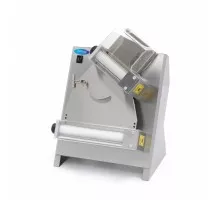
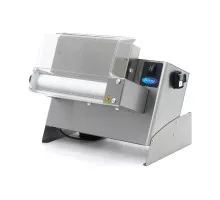
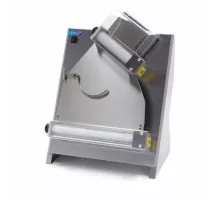
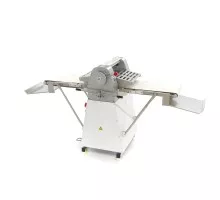
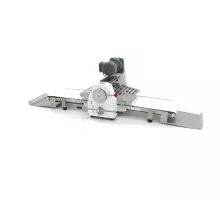
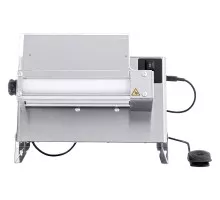
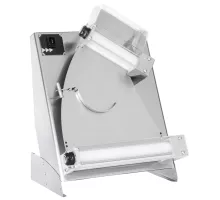
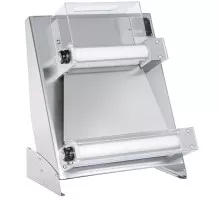
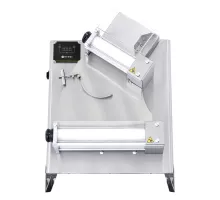
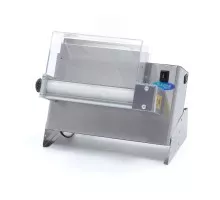
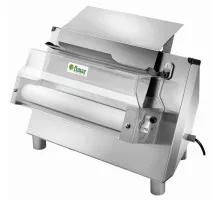
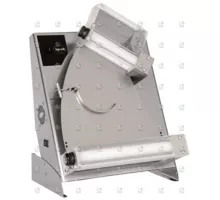
.webp "GS24.lv")
 +371 29 148 185
 WhatsApp
 info@gs24.lv
 Contacts
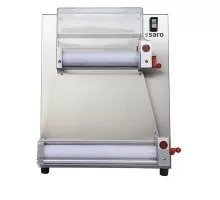
Dough rollers from GS24.lv
GS24.lv (Gastroserviss SIA) supplies professional dough rollers for bakeries, pastry workshops, pizzerias, restaurants, cafés and food production facilities across Latvia. We help select equipment according to dough type, rolling width, required thickness, production volume and workflow.
A correctly selected dough roller helps achieve uniform dough thickness, speed up production, reduce manual work and keep product quality stable from one batch to another.
Where dough rollers are used
- bakeries;
- pastry production facilities;
- pizzerias;
- restaurants;
- cafés;
- central kitchens;
- semi-finished product production;
- food production facilities.
What tasks a dough roller solves
- uniform dough thickness;
- faster dough sheet preparation;
- higher staff productivity;
- less manual rolling work;
- stable product quality;
- standardised production process.
Products made with dough rollers
- pizza;
- bakery products;
- puff pastry;
- croissants;
- Danish pastry;
- pies and filled pastry;
- tarts;
- pastry bases;
- fresh pasta;
- other dough products.
What affects rolling quality
- dough consistency;
- selected thickness setting;
- working width;
- roller condition;
- correct production process;
- regular cleaning;
- proper equipment adjustment.
What to check before choosing
- rolling width;
- thickness adjustment range;
- productivity;
- dough type;
- installation format;
- equipment dimensions;
- cleaning convenience;
- connection requirements;
- service support;
- availability of spare parts.
Related categories
FAQ
1. What is a dough roller?
A dough roller is equipment for rolling dough into sheets of uniform thickness.
2. What is a dough roller used for?
It is used to speed up production and achieve stable results when working with dough.
3. Why is a dough roller better than manual rolling?
It provides consistent dough thickness and significantly increases productivity.
4. What dough types are suitable for dough rollers?
Depending on the model, dough rollers can be used for pizza, bakery products, puff pastry and other dough products.
5. How to choose the rolling width?
The width is selected according to finished product size and production tasks.
6. What affects dough thickness?
The main factors are equipment settings and dough characteristics.
7. When is a countertop dough roller suitable?
Countertop models are usually used in smaller kitchens and production areas.
8. When is a floor-standing model needed?
Floor-standing dough rollers are selected for higher production volumes.
9. Is a dough roller suitable for puff pastry?
Many models are used for puff pastry, but manufacturer recommendations must be checked.
10. Is a dough roller suitable for croissants?
Yes, many professional models are used for croissants and laminated pastry products.
11. Can a dough roller be used in pizzerias?
Yes, it helps prepare dough bases with stable diameter and thickness.
12. How should a dough roller be maintained?
The equipment should be cleaned regularly and maintained according to manufacturer instructions.
13. What parameters are most important?
Rolling width, thickness range, productivity and dough type are usually the key parameters.
14. What equipment is usually used together with a dough roller?
Dough kneaders, planetary mixers, proofing cabinets and dough dividing machines are often used together with dough rollers.
15. What should be checked before purchase?
Production volume, dough type, installation space, connection, cleaning access and spare parts availability should be checked.