.webp "GS24.lv")
 +371 29 148 185
 WhatsApp
 info@gs24.lv
 Contacts
A kebab or shawarma point works like a short production line: meat is heated on a vertical grill, sliced quickly, combined with vegetables, sauces and packaging, and the order is handed to the customer immediately. For this reason, kebab equipment should not be selected as separate items, but as one connected working section.
The main mistake when launching this direction is buying only a doner machine and not planning the area around it. In practice, serving speed depends on where the grill is placed, how the meat is sliced, where sauces, vegetables, GN containers, packaging, knives, napkins and the assembly area are located. If these elements are placed inconveniently, staff lose time on every order.
Working scenario of a kebab point
- the meat block is placed on a vertical grill and heated evenly along the working height;
- the ready meat layer is cut with a manual or electric knife;
- sliced meat immediately moves to the order assembly area;
- vegetables, sauces and additions must be close to the working surface;
- packaging should be in the serving area, not in a separate place;
- the working surface must be cleaned quickly during the shift;
- extraction must cope with heat, grease and smell.
What the equipment set consists of
For full operation, one machine is usually not enough. A set of equipment and tools is required. The composition depends on the outlet format, menu, order quantity and available space.
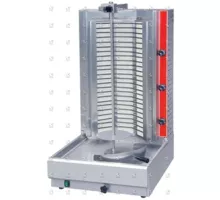
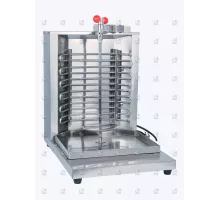
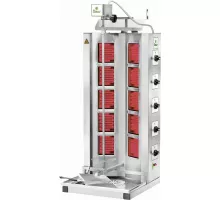
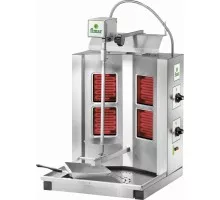
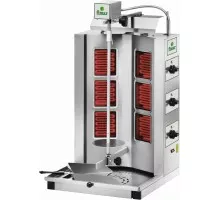
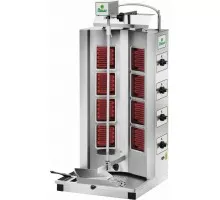
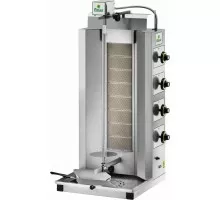
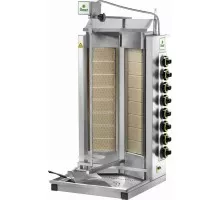
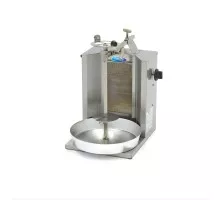
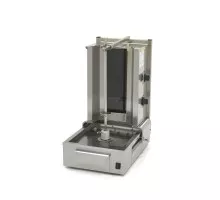
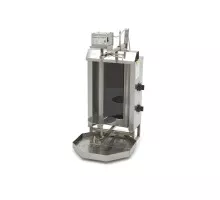
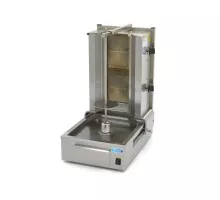
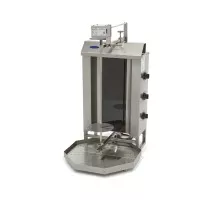
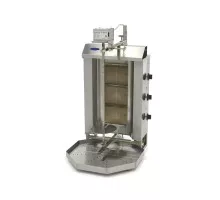
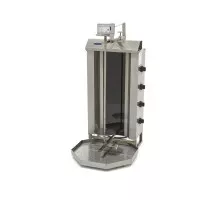
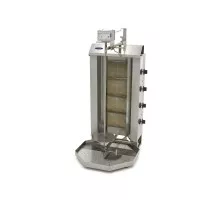
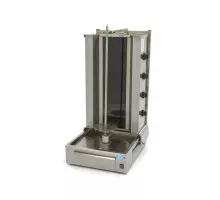
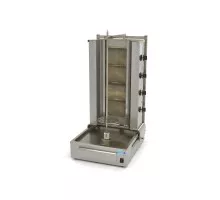
- vertical grill for kebab, shawarma or doner;
- gas or electric heating depending on connection;
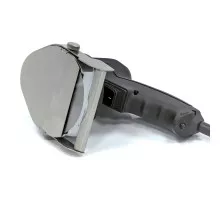
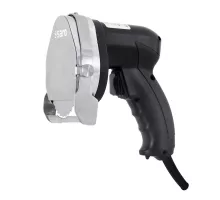
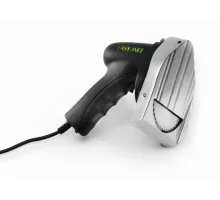
- meat slicing knife — manual or electric;
- GN containers for meat, vegetables, sauces and preparations;
- working table or surface for order assembly;
- refrigerated storage for ingredients and semi-finished products;
- packaging, foil, bags, napkins and consumables;
- tools for maintaining cleanliness and fast staff work.
Gas or electric grill
Gas appliances are selected where suitable gas connection is available and high heat output is required. They need correct installation, ventilation and regular burner control. Electric appliances are convenient for facilities without gas, but available electrical power and connection conditions must be checked before purchase.
When choosing an appliance, price and external size are not enough. Meat block weight, skewer height, number of heating zones, heat control, cleaning convenience, access to working elements and position relative to extraction and slicing area must be considered.
Meat slicing and serving speed
The kebab knife often becomes the bottleneck. If order flow is low, a manual knife may be sufficient. Under constant workload, an electric knife helps slice meat faster and more evenly, maintain portion stability and avoid delays in order assembly.
- for dense order flow, slicing speed is important;
- slice thickness affects portion, appearance and cost control;
- the knife must be easy to clean and maintain;
- the slicing place should be close to the assembly area;
- staff must have safe access to the grill and knife.
Ingredients, sauces and packaging
Kebab, shawarma and doner are assembled quickly only when ingredients are placed in the order of use. Vegetables, sauces, meat, lavash, buns, packaging and napkins should follow a logical sequence. If packaging is stored separately, sauces are far away and GN containers block the surface, speed drops even with a good grill.
Ventilation, grease and cleaning
The kebab area produces heat, grease, smell and constant load on the work surface. Before installation, extraction, distance to walls, cleaning access, protection of nearby surfaces and staff safety must be checked. The appliance, knife, GN containers and work area must be cleaned not only at the end of the day, but also during the shift.
Common mistakes in kebab point organisation
- the machine is installed without a convenient meat slicing area;
- packaging and sauces are far from the working surface;
- there is not enough space for GN containers and ingredients;
- peak load in portions per hour is not calculated;
- extraction does not cope with heat, grease and smell;
- there is no clear place for dirty tools and quick cleaning;
- the machine is selected without considering meat block height and connection type.
FAQ
1. Where should selection of kebab equipment start?
Start by defining the outlet format, portions per hour, connection type, meat block size, installation place, extraction and order assembly scheme.
2. What is more important — grill or working area organisation?
The grill is important, but without a proper slicing area, ingredients, sauces and packaging, serving speed will be low. Equipment should be selected as one working section.
3. When should a gas appliance be selected?
A gas appliance is suitable when gas connection is available, workload is high and extraction, safety and burner maintenance can be organised correctly.
4. When should an electric appliance be selected?
An electric appliance is suitable for facilities without gas, but network power, connection and electrical load must be checked before installation.
5. Why is an electric kebab knife needed?
An electric knife speeds up slicing, helps make a more even cut and reduces staff workload when order quantity is high.
6. How should ingredients be organised?
Vegetables, sauces, meat, lavash, packaging and consumables should be placed in order of assembly. This reduces unnecessary movements and speeds up serving.
7. Why is extraction important for a kebab point?
A vertical grill produces heat, grease and odours. If extraction is weak or positioned incorrectly, the workplace quickly becomes uncomfortable and dirty.
Request kebab equipment selection
For equipment selection, it is useful to provide information about the outlet, workload, connection and working area.
- facility format: café, kiosk, food court, bar, street food or restaurant;
- connection type: gas or electricity;
- expected portions per hour;
- meat block size and working height of the appliance;
- availability of extraction, working surface, packaging and refrigerated ingredient storage.