 +371 25 856 856
 WhatsApp
 shop@gastroserviss.lv
 Contacts
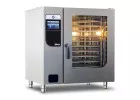
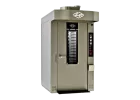
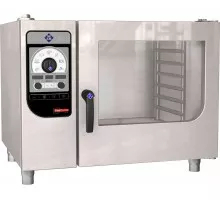
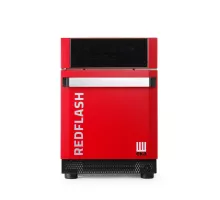
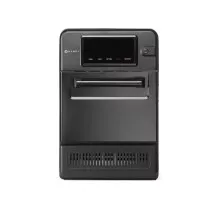
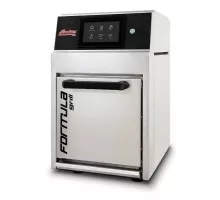
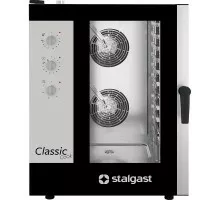
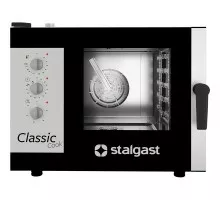
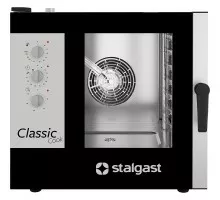
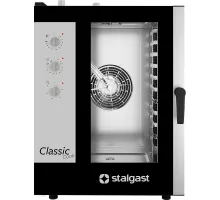
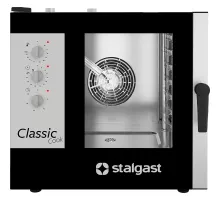
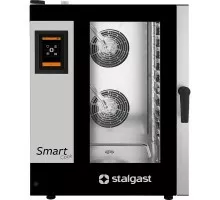
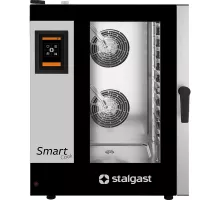
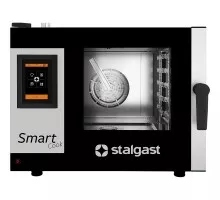
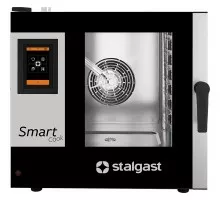
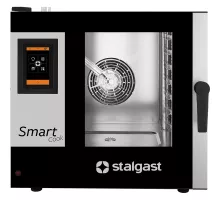
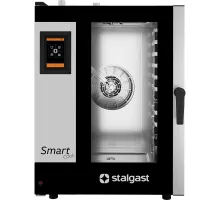
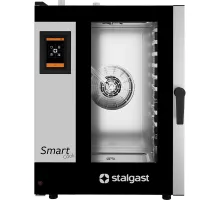
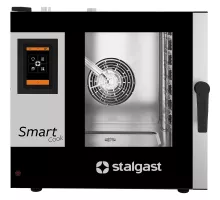
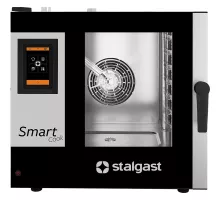
The Ovens section includes professional ovens for restaurants, cafés, hotels, bakeries, pastry workshops, culinary departments, production kitchens and HoReCa sites. It includes combi steamers, multi-size ovens for GN 1/1 and 60x40, bakery and confectionery ovens, convection ovens, rotary convection ovens, potato ovens, baking ovens, oven stands and accessories for ovens.
A professional oven should not be selected only by external size or number of levels. Site format, menu, load, product type, tray size, GN format, temperature, steam, baking uniformity, connection, ventilation, extraction, water, drain, installation space and service access must be considered.
Main categories in this section
- Combi steamers — equipment for cooking with convection, steam and combined modes;
- Multi-size ovens GN 1/1 & 60x40 — ovens for kitchens using different gastronorm and tray formats;
- Bakery and confectionery oven — solutions for bakeries, pastry workshops and production areas;
- Convection ovens — ovens with hot air circulation for baking, reheating and cooking;
- Bakery oven — ovens for products where uniformity, temperature and tray work are important;
- Rotary convection ovens for pastry — ovens for uniform baking at higher load;
- Potato ovens — specialised ovens for baked potatoes and ready portions;
- Baking Oven — thermal equipment for baking, reheating and cooking dishes;
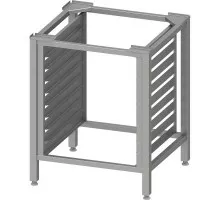
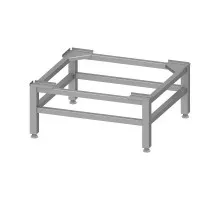
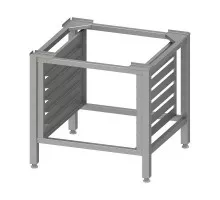
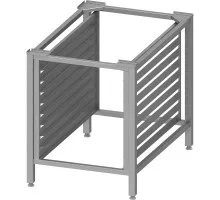
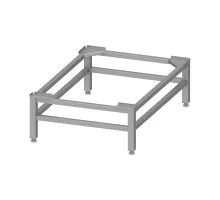
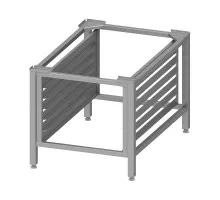
- Oven stands — bases and stands with or without runners;
- Accessories for ovens — accessories and additional elements for oven operation.
Related sections for connection and maintenance
- Water softeners and filters — water preparation for combi steamers, steam ovens, automatic washing systems and equipment sensitive to scale;
- Professional chemicals — washing and cleaning products for ovens, chambers, trays and equipment with automatic washing;
- Service & Repair — diagnostics, maintenance, replacement of elements and service support for professional thermal equipment.
Where professional ovens are used
Professional ovens are used in different kitchen formats. In restaurants, flexibility and stable work under the menu are important. In bakeries and pastry workshops, baking uniformity, tray format, humidity, temperature and repeatability matter. In culinary departments and production, load, speed, durability, easy washing and stable work during the shift are important.
- restaurants, cafés, bars, hotels and canteens;
- bakeries, pastry workshops and production areas;
- culinary departments, shops with ready food and bakery departments;
- catering, banquet kitchens and hotel kitchens;
- production kitchens with regular load;
- sites baking bread, buns, pies, cookies and desserts;
- kitchens requiring cooking, regeneration, baking and reheating.
Main types of professional ovens
Combi steamers suit kitchens that need to cook different products in one unit: meat, fish, vegetables, side dishes, pastry, semi-finished products and meals for regeneration. Steam and combined modes help control humidity, product weight loss and cooking quality.
Convection ovens are used for baking, roasting and reheating by means of even hot air circulation. They suit cafés, bakeries, smaller production sites, shops and locations where repeatability and stable temperature are important.
Bakery and pastry ovens are selected by tray format, chamber height, temperature range, humidity, heating uniformity and product type. Bread, buns, puff pastry, cookies, pies and pastry blanks may require different oven parameters.
Rotary convection ovens are used where high load and uniform baking of many products are needed. Trolleys, tray dimensions, air movement, power, steam humidification and maintenance access are especially important for these ovens.
Baking ovens and specialised ovens are used for narrower tasks: baking, reheating, baked potatoes, ready portions or a separate cooking section.
What to consider when choosing
Before selecting an oven, the real task must be understood, not only the number of levels. One oven may be good for pastry products but inconvenient for GN containers. Another may be designed for GN 1/1 but not suitable for 60x40 trays. Product format and workflow should be defined in advance.
- kitchen type: restaurant, café, bakery, pastry workshop, shop, production or catering;
- main products: meat, fish, vegetables, bakery, bread, desserts, semi-finished products or ready meals;
- loading format: GN 1/1, GN 2/3, 60x40, 40x60, trays or special trolleys;
- number of levels, distance between runners and chamber height;
- steam, humidification, manual or automatic humidity control;
- temperature range, heating uniformity and stability under full load;
- connection type: electricity, gas, water, drain, ventilation and extraction;
- dimensions, weight, stand, passageways, installation place and service access;
- washing frequency, automatic washing, chemical consumption and water requirements;
- work mode: several hours per day, full shift or intensive production load.
Water, filtration and softening
For combi steamers, ovens with steam humidification and models with automatic washing, water quality has direct importance. Hard water causes scale, worsens steam generation, increases chemical consumption, makes the chamber dirtier faster and can lead to errors, breakdowns and extra service costs.
Before installing such an oven, water quality at the site should be checked: hardness, mechanical impurities, mineralisation and actual equipment manufacturer requirements. Filters, softeners, cartridges or a water preparation system are selected based on the result. This is especially important for combi steamers, bakery ovens with steam, boiler equipment, injection steam and automatic washing systems.
Water preparation should be planned together with the oven. Water softeners and filters are easier to select before scale, errors or poor steam quality appear.
GN 1/1, 60x40 and compatibility
One of the main questions when choosing an oven is the loading format. GN 1/1 is usually used in restaurant kitchens, hot sections, regeneration and work with gastronorm containers. The 60x40 format is more typical for bakeries, pastry production, baking and trays. Universal GN 1/1 and 60x40 ovens can be useful where different processes are combined.
Before purchase, not only tray or container size should be checked, but also actual runner distance, chamber depth, runner type, stand compatibility, trolley compatibility, loading height and staff convenience.
Connection, ventilation and installation
Ovens are thermal equipment with a high load on the room. Electrical power, gas connection, cable cross-section, circuit breaker, water, drain, extraction requirements, heat removal, distances to nearby equipment and installation safety should be checked in advance.
Combi steamers and some bakery ovens may require water and drain connection. Stable operation also depends on water quality, filtration, softening and regular maintenance. Untreated water may cause scale, errors, poor steam quality and additional service costs.
Performance and load
Oven performance depends not only on the number of levels. Chamber size, power, temperature recovery after loading, product type, humidity, distance between trays, air circulation and work mode matter. A small oven may be convenient for a café but insufficient for bakery or production peak load.
For intensive operation, durability, easy washing, availability of consumables, service support and quick replacement of important elements should be considered.
Accessories, stands and maintenance
Ovens often need stands, runners, trays, GN containers, trolleys, extraction hoods, water filters, washing chemicals, core probes and other accessories. These should be planned immediately because daily work may be inconvenient without them.
Maintenance depends on oven type. Combi steamers require chamber cleaning, water filtration, washing, chemicals and steam system checks. Bakery and pastry ovens require clean chambers, good seals, fans, heating elements and baking uniformity.
Practical notes
- define the loading format before choosing the oven: GN, 60x40 trays or another size;
- baking requires heating uniformity, humidity and correct distance between levels;
- restaurant kitchens need flexibility, speed, steam, washing and convenient programs;
- bakeries and pastry workshops must check tray format and product height;
- for combi steamers, water, drain, filtration, softening and chemicals must be considered in advance;
- before installing an oven with steam or washing, water quality and manufacturer requirements must be checked;
- installation requires power, passageways, extraction and service access checks;
- stands, runners, trays, water filters and accessories should be selected together with the oven.
Common mistakes when choosing
- choosing an oven only by number of levels without checking tray format;
- confusing GN 1/1 and 60x40 ovens although they serve different workflows;
- not checking power, connection, extraction, water and drain before purchase;
- installing a combi steamer without checking water quality, filtration and softening;
- choosing an oven too small for peak load;
- not considering runner distance and product height;
- not planning a stand, trays, GN containers, water filters and accessories;
- forgetting maintenance, washing, water filters, chemicals and service access.
Why GS24.lv / GASTROserviss
- more than 20 years of work with professional thermal equipment, ovens, combi steamers, bakery and pastry equipment;
- we select ovens by kitchen format, menu, load, GN, trays, connection and operating conditions;
- we consider not only the oven but also stands, accessories, water, filtration, softening, extraction, installation and service;
- we understand the difference between restaurant kitchens, bakeries, pastry workshops, production, shops and catering;
- we can combine oven selection, installation, accessories, water preparation, consumables and service maintenance into one practical task;
- we focus on compatibility, reliable operation, staff convenience and real site conditions.
Request professional oven selection
For accurate selection, it is useful to specify the site format, menu, product type, required load, tray or GN format, connection, water quality and installation place. If the oven replaces an old model, a nameplate photo and dimensions of the existing equipment are useful.
- site type: restaurant, café, bakery, pastry workshop, shop, production or catering;
- which products will be cooked or baked;
- required format: GN 1/1, GN 2/3, 60x40, 40x60 or another;
- approximate load per day or shift;
- connection type: electricity, gas, water, drain, ventilation;
- whether water hardness is known and filtration or softening is needed;
- installation space dimensions, passageways and stand availability;
- whether trays, GN containers, stand, water filter, extraction or installation are required.
FAQ
1. What oven is needed for a restaurant?
Restaurants often use combi steamers or convection ovens because they cover cooking, roasting, regeneration, baking and work with prepared items. The exact choice depends on menu, load, tray format, connection and kitchen work mode.
2. What is the difference between a combi steamer and a convection oven?
A convection oven works with hot air. A combi steamer uses hot air, steam and combined modes, so it is better for broader menus, humidity control, lower product weight loss and stable results under different loads.
3. What should be selected: GN 1/1 or 60x40?
GN 1/1 is more common in restaurant kitchens, hot sections, regeneration and work with gastronorm containers. 60x40 is more suitable for bakery and pastry work. If both processes are needed, universal GN 1/1 and 60x40 ovens should be considered.
4. How many levels are needed in an oven?
The number of levels depends on load, product height, runner distance, tray format and work mode. An oven should not be selected only by level count because two ovens with the same level count may differ greatly in useful capacity and performance.
5. Is a water softener needed for a combi steamer?
In most cases, water should be checked in advance. If water is hard, filtration, softening or another water preparation solution is needed; otherwise scale, poor steam quality, higher chemical consumption and service problems may appear.
6. When are water filters needed for an oven?
Water filters are needed for combi steamers, ovens with steam humidification, automatic washing, boiler systems or injection steam. Selection depends on water quality, manufacturer requirements, hardness, mechanical impurities and operation mode.
7. What should be checked in water before oven installation?
Water hardness, mechanical impurities, manufacturer water requirements, pressure, connection, drain and the possibility of installing a filter or softener should be checked.
8. What should be checked before installing a professional oven?
Power, cable, circuit breaker, gas or electricity, water, drain, water quality, filtration, extraction, ventilation, passageways, weight, installation place, stand and service access should be checked.
9. Is extraction needed for a professional oven?
For most professional ovens, extraction, heat removal and ventilation should be checked in advance. Requirements depend on oven type, power, steam, work intensity, room and nearby equipment.
10. What accessories are needed for an oven?
Trays, GN containers, stands, runners, trolleys, water filters, softeners, washing chemicals, core probes, extraction elements and additional accessories are often needed.
11. What is important for an oven with automatic washing?
Water quality, filtration or softening, suitable chemicals, drain, regular cleaning and manufacturer requirements are important. Incorrect water and unsuitable chemicals can increase consumption, worsen washing and reduce equipment life.
12. How to understand whether an oven suits kitchen load?
Portion count, shift load, product format, cooking time, chamber size, power, temperature recovery after loading, level count, runner distance and peak hour intensity must be considered.