.webp "GS24.lv")
 +371 29 148 185
 WhatsApp
 info@gs24.lv
 Contacts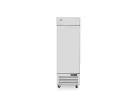
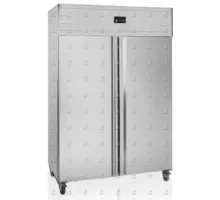
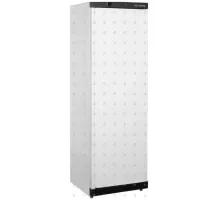
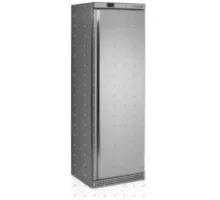
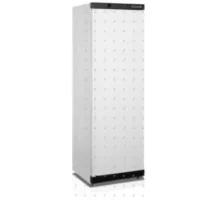
Upright freezer cabinets are used for professional storage of frozen products at a stable negative temperature. This equipment is suitable for restaurants, cafés, shops, bakeries, confectioneries, production kitchens, storage areas and HoReCa sites where products must be kept under controlled temperature conditions and remain quickly accessible to staff.
The category belongs to the refrigerators and freezers section. Upright format is convenient for storing meat, fish, semi-finished products, frozen vegetables, berries, dough blanks, ice cream and other frozen products. Compared with chest freezers, a freezer cabinet provides front access, shelf separation and clearer product organisation.
Main selection parameters
- useful chamber volume and real loading capacity;
- working temperature range;
- cooling type: static or ventilated;
- door type: solid or glass;
- number of shelves, runners and storage format;
- body and inner chamber material;
- control type and temperature display;
- energy consumption, climate class and installation conditions;
- external dimensions, ventilation gaps and service access.
Static and ventilated cooling
Static cooling works without active air distribution inside the chamber. It is suitable for less intensive storage when the door is not opened too often and the cabinet is not constantly overloaded.
Ventilated cooling uses a fan to distribute temperature more evenly inside the cabinet. For professional kitchens, shops or production areas with frequent door opening, this option is usually more practical: temperature recovers faster and different storage levels remain more stable.
Related refrigeration sections
- Refrigerators and chillers — for chilled product storage;
- Combined refrigerators — for sites where different temperature zones are needed;
- Fish refrigerators — for specialised fish product storage;
- Cooling counters and tables — for kitchens where storage is combined with a work surface;
- Cold rooms — for large-volume storage;
- Refrigerator accessories — additional elements for operation and storage organisation.
What to consider during installation
- the freezer cabinet must be installed with required ventilation gaps;
- doorways, passages and installation space should be checked in advance;
- room temperature must match the equipment climate class;
- the chamber must not be overloaded above the permitted capacity;
- separate storage may be required for different product groups;
- access for cleaning, maintenance and repair must be provided.
Why GS24.lv / Gastroserviss
- selection of freezer cabinets by storage volume, product group and temperature mode;
- consideration of kitchen load, installation conditions, ventilation and available space;
- supply of professional refrigeration equipment for restaurants, shops, cafés and production sites;
- possibility to select related refrigerators, chest freezers, cooling counters, cold rooms and accessories;
- equipment selection consultation: +371 29 148 185, +371 25 856 856.
Request freezer cabinet selection
For selection, specify the type of site, products for storage, approximate volume, required temperature mode, installation space dimensions, door type and operating conditions. A request can be sent through the contacts section.
FAQ
1. What are upright freezer cabinets used for?
They are used for storing frozen products at a stable negative temperature in professional kitchens, shops, storage areas and production zones.
2. How does a freezer cabinet differ from a chest freezer?
A freezer cabinet is more convenient for organised storage, shelf separation and quick access. A chest freezer is often used for large volumes of similar products.
3. Which cooling type should be selected?
For intensive kitchen use and frequent door opening, ventilated cooling is usually preferred. Static cooling is suitable for less intensive storage.
4. What volume is needed?
The volume depends on turnover, product groups, delivery frequency and required storage reserve.
5. Can different products be stored in one cabinet?
Technically yes, but for hygiene and stock control it is often better to separate meat, fish, semi-finished products, vegetables and confectionery blanks.
6. What should be checked before purchase?
Check volume, temperature range, cooling type, dimensions, door type, shelves, energy consumption, climate class and installation conditions.