.webp "GS24.lv")
 +371 29 148 185
 WhatsApp
 info@gs24.lv
 Contacts
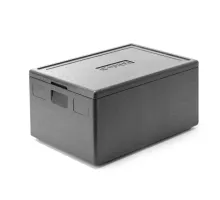
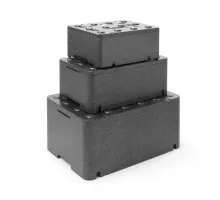
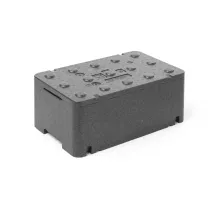
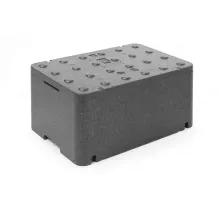
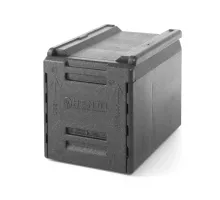
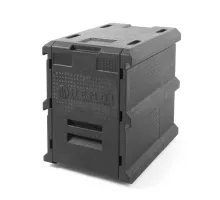
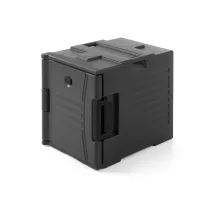
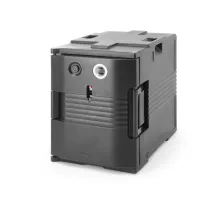
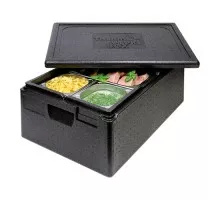
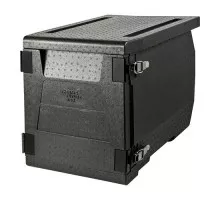
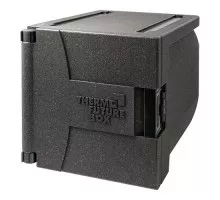
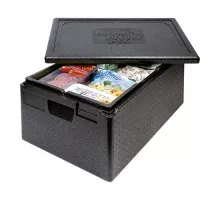
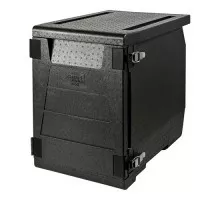
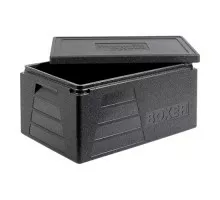
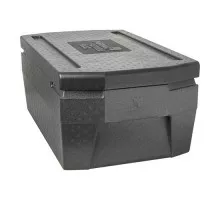
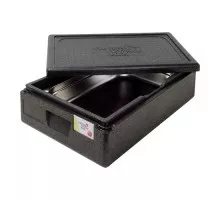
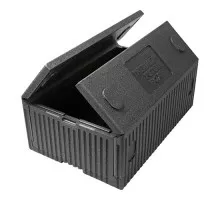
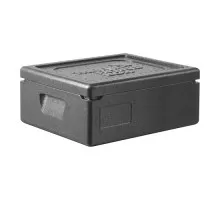
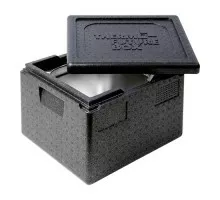
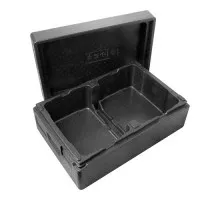
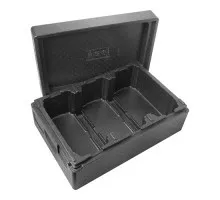
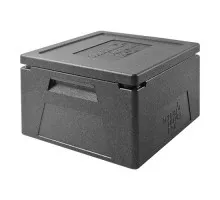
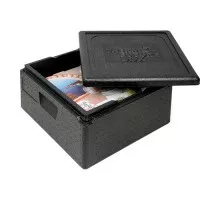
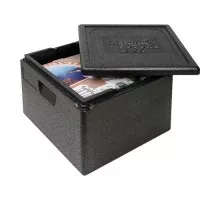
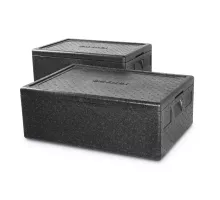
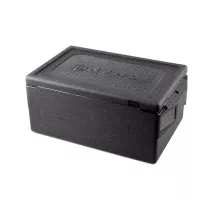
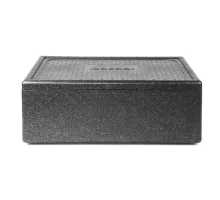
Thermal boxes are used for transporting ready meals, semi-finished products, food items and gastronorm containers while preserving temperature during delivery, catering, off-site service and internal kitchen logistics. They help reduce heat loss, protect food from the external environment and organise transport between the kitchen, serving point, client site or service area.
A thermal box should not be selected only by external size. For professional use, useful volume, GN container compatibility, loading height, wall thickness, lid, fixation, carrying comfort, stacking, washing, sanitation and the required temperature holding time are important. The same thermal box may be convenient for short delivery but unsuitable for catering or transporting a large number of GN containers.
Related insulated transport and delivery sections
- Insulated transport — general section for insulated transport of food, drinks and products;
- Insulated Food Container — solutions for transporting ready meals, GN containers and food products;
- Food Delivery Thermal Bags — soft solutions for courier delivery, pizza, hot meals and smaller orders.
Where thermal boxes are used
Thermal boxes are needed where food must reach the customer, hall, off-site event or another kitchen without a sharp temperature drop. This is important for ready meal delivery, banquets, catering, fast food operations, canteens, production kitchens, hotels and businesses where part of the process is moved outside the main kitchen.
- delivery of hot meals and set lunches;
- catering and off-site service;
- transport of GN containers between kitchen and site;
- temporary holding of dishes before serving;
- transport of cold products and preparations;
- logistics between a production kitchen, sales point and service area;
- work at events where there is no full kitchen on site.
Volume, GN format and loading
When selecting a thermal box, it is important to understand what will be transported: individual containers, GN containers, boxes, packaging, drinks, cold preparations or hot meals. For GN containers, format, depth, number of levels, loading height and quick access without unnecessary temperature loss must be considered.
A box that is too small forces overloading and makes staff work harder. A box that is too large for a small load may hold temperature worse, takes more space in the vehicle and is less convenient to carry. Therefore, volume should be selected not simply “with reserve”, but according to the real route, number of portions, packaging type and delivery frequency.
Temperature, delivery time and route
A thermal box does not heat or cool the product by itself. Its task is to slow down temperature loss. The result depends on the starting temperature of the dish, load density, how often the lid is opened, travel time, ambient temperature and how quickly the product moves from the kitchen into the box.
- hot meals should be loaded immediately after cooking or hot holding;
- the lid should not be opened frequently without need;
- cold and hot products should not be mixed in one volume;
- route and delivery time should be considered before selecting size;
- for long routes, stable insulation and dense loading are more important;
- for frequent serving, access convenience may be more important than maximum volume.
Construction, washing and sanitation
A professional thermal box must withstand regular loading, carrying, washing and work in kitchen or delivery conditions. Body material, lid, handles, corners, inner surface, resistance to dirt and sanitation possibility should be checked. If the box is used for food, it must be cleaned regularly from fat, sauces, condensation and packaging residues.
Practical notes from chefs, catering and delivery work
- a thermal box works better when it is loaded quickly and food does not wait long in open air;
- if the courier opens the box often, temperature drops faster even with good insulation;
- for catering, hot dishes, cold items, bread, packaging and tools should be separated in advance;
- GN format is convenient if the kitchen already works with gastronorm containers and fast transfer is needed;
- for small delivery orders, a thermal bag may be more convenient, while larger volumes need a rigid thermal box;
- a dirty or poorly dried box quickly creates odours and sanitation problems;
- on long routes, not only volume but also the serving order of dishes should be planned.
Common mistakes in selection and use
- choosing a thermal box only by external size;
- not checking compatibility with GN containers and packaging;
- mixing hot and cold products in one box;
- opening the lid frequently during the route;
- loading food after it has already lost too much temperature;
- not considering washing, drying and sanitary storage;
- choosing a box that is too large for small loads or too small for real order volume.
FAQ
1. What is a thermal box used for?
A thermal box is used to transport food, products and GN containers while reducing temperature loss during delivery, catering or internal logistics.
2. Does a thermal box heat food?
No. A thermal box does not heat food; it helps keep the original temperature longer. Therefore, meals must be loaded already hot or properly chilled.
3. How to choose thermal box volume?
Volume is selected by number of portions, packaging type, GN format, delivery route, loading frequency and vehicle space.
4. Can hot and cold products be transported together?
It is better to separate hot and cold products into different thermal boxes so temperature and food quality are not disturbed.
5. What is more important: large volume or carrying comfort?
It depends on the task. For catering and GN containers, volume is important; for frequent delivery and hand carrying, weight, handles and access convenience are important.
6. How to maintain a thermal box?
After work, the thermal box should be cleaned, washed, dried and stored open or in a dry place to avoid odours, dirt and sanitation problems.
7. When is a thermal bag better than a thermal box?
A thermal bag is convenient for small orders, pizza and courier delivery. A rigid thermal box is better for larger volumes, GN containers and catering.
Why GS24.lv / GASTROserviss for thermal boxes and food delivery
- more than 20 years of work with professional HoReCa equipment, inventory and solutions for restaurants, cafés, catering, delivery and production kitchens;
- we select thermal boxes not only by litres, but by route, dish type, packaging, GN format, delivery time and staff workflow;
- we consider real kitchen processes: cooking, hot holding, loading, transport, serving, washing and sanitation;
- we can connect thermal box selection with other delivery solutions: thermal bags, GN containers, packaging and tools;
- we understand the difference between restaurant delivery, catering, canteen, production kitchen and off-site service;
- we help choose a solution that preserves food quality and does not complicate staff work.
Request thermal box selection
For thermal box selection, it is useful to specify what needs to be transported, in what volume and how long delivery or service takes.
- product type: hot meals, cold meals, GN containers, boxes, packaging or drinks;
- approximate number of portions or gastronorm containers;
- delivery time or waiting time before serving;
- whether a rigid thermal box is needed or a thermal bag is enough;
- work conditions: courier delivery, catering, event site, canteen or production kitchen;
- washing, storage, carrying and vehicle space requirements.