.webp "GS24.lv")
 +371 29 148 185
 WhatsApp
 info@gs24.lv
 Contacts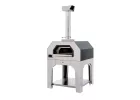
A pizza section is built around several connected stages: dough mixing, proofing, ingredient preparation, base forming, baking, cutting and serving. If one of these stages is weaker than the others, the whole pizza line slows down: dough is not ready on time, ingredients are stored inconveniently, the oven waits empty, or staff lose time during order assembly.
For cafés, restaurants, pizzerias, food courts and delivery services, pizza equipment should be selected not as separate items, but as a workflow. The oven is important, but it does not solve everything. Stable results also depend on the dough mixer, dough working area, refrigerated ingredient storage, peels, knives, slicers, GN containers, packaging and serving organisation.
Related fast food sections
- Fast food equipment — general section for quick preparation, serving and self-service equipment;
- Kebab — equipment for shawarma, doner, vertical grills, slicing, packaging and serving;
- Toast, Pancake & Waffle Equipment — equipment for hot snacks, breakfasts, desserts and quick service points;
- Buffet table — equipment for serving, display and holding dishes in self-service areas;
- Designing the buffet — elements for organising serving lines, presentation and work with prepared dishes.
Pizzeria process map
- dough mixing — the mixer is selected by batch volume, dough type and number of cycles per day;
- proofing and dough storage — temperature, containers, fermentation time and staff workflow are important;
- ingredient preparation — cheese, sauces, vegetables, meat products and preparations should be stored near the working area;
- base forming — a convenient work surface, flour, tools and temporary preparation space are needed;
- baking — the oven is selected by pizza type, temperature, size, productivity and available area;
- serving — cutting, packaging, boxes, peels and order handover area must be planned in advance.
The oven is central, but it is not the whole pizzeria
A pizza oven is selected by facility format and product: classic pizza, takeaway pizza, delivery, high-flow food court work or restaurant menu with different dishes. Baking temperature, chamber size, pizzas per cycle, temperature recovery time, connection type and ventilation must be considered.
If the oven is powerful but the preparation area is weak, staff cannot load it evenly. If there are many preparations but no proper refrigerated table, ingredients block the work surface. If there is no place for cutting and packaging, the delay appears after baking. For this reason, the pizza line must be viewed as a whole.
Dough, mixer and base preparation
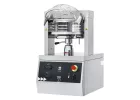
Dough is one of the key sections. The mixer must match production volume, recipe, dough hydration and number of mixes per day. A small point may use a compact solution, while a pizzeria with delivery or high seating capacity must calculate dough volume in advance.
- bowl volume must match the real dough batch;
- mixing frequency affects motor load and staff workload;
- dough needs space for storage and proofing;
- the work surface must be convenient for base forming;
- dough tools should be stored near the preparation area.
Dough temperature and pizzaiolo rule
When mixing dough, not only the recipe but also temperature must be controlled. In practice, a common guideline is that room temperature + flour temperature + water temperature should total about 55–60°C, often around 55–58°C. This helps achieve stable dough temperature after mixing and more predictable fermentation.
For example, if room temperature is 22°C, flour temperature is 21°C and the target sum is 58°C, water should be about 15°C. This calculation helps avoid dough overheating, especially during intensive mixing or high kitchen temperatures.
Ingredients and refrigerated organisation
For pizza, ingredients must be taken quickly in the correct sequence. Sauce, cheese, vegetables, meat products, herbs and additional toppings should be accessible but not block dough work. Refrigerated tables, GN containers and lids help maintain order, temperature and assembly speed.
Practical notes from pizzaiolos and chefs
- the pizza line is not slowed down only by the oven: delays most often appear in dough, ingredients, assembly or packaging;
- if dough preparation is unstable, even a good oven will not give the same result in crust, structure and baking;
- cheese, sauce and main ingredients should be near the assembly area, otherwise staff make unnecessary movements for every pizza;
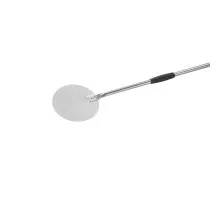
- the loading peel and unloading peel should be at hand, not stored away from the oven;
- under high workload, dough, toppings, oven, cutting, boxes and serving zones should be separated in advance;
- for delivery, the weak point is often not baking, but packaging and the place for finished orders;
- if the oven works at high temperature, staff must work quickly and confidently with loading, turning and removing pizza;
- a refrigerated pizza table speeds up assembly strongly, but it must be selected by real ingredient quantity and working area size.
Typical mistakes when launching pizza production
- the oven is selected without calculating pizzas per hour;
- the dough mixer does not match dough volume and number of mixes;
- ingredients are stored far from the forming area;
- there is no separate place for cutting, boxes and serving;
- ventilation and heat from the oven are not considered;
- peels, knives, slicers and tools are stored without process logic;
- for delivery, packaging, boxes and the place for assembled orders are not calculated.
FAQ
1. Where should selection of pizza equipment start?
First define the work format: restaurant service, takeaway pizza, delivery, food court or a small point. Then calculate pizzas per hour, pizza size, dough type and available space.
2. Why should equipment selection not start only from the oven?
The oven is important, but without a mixer, refrigerated preparation, work surface, peels, cutting and packaging, the pizza line will be unstable.
3. How to choose a pizza oven?
Pizza size, baking temperature, pizzas per cycle, connection type, temperature recovery, ventilation and service format must be considered.
4. How to choose a dough mixer?
The mixer is selected by dough volume, recipe type, number of mixes per day, motor load and installation place.
5. What temperature is important during dough mixing?
A common guideline is the sum of room, flour and water temperatures at about 55–60°C. This helps achieve stable dough after mixing and avoid overheating.
6. Why is a refrigerated pizza table needed?
A refrigerated table helps keep ingredients near the assembly area, maintain temperature and speed up staff work under high order volume.
7. What is important for pizza delivery?
For delivery, boxes, packaging area, waiting area for ready orders, baking speed and quality stability after transport must be considered.
8. What most often slows down pizzeria work?
Delays most often appear not in the oven, but in dough preparation, ingredient storage, assembly, cutting, packaging and order handover.
Request pizza equipment selection
For equipment selection, it is useful to provide information about pizzeria format, order volume, dough type, pizza size and installation place.
- facility format: pizzeria, restaurant, café, food court, delivery or takeaway;
- pizza size and expected number of pizzas per hour;
- dough type, batch volume and number of mixes per day;
- available connection, ventilation and place for the oven;
- whether a refrigerated table, preparation table, peels, knives, packaging and serving area are needed.